

👉This week, we’re talking about: beta-carotene for type 2 diabetes, sweet potatoes at an amazing source of beta-carotene, tips and tricks for selecting and storing sweet potatoes, leveraging packaged foods to make cooking at home easier, and I’m sharing my simple recipe for Baked Spiced Sweet Potatoes.
Key Takeaways
✅Among beta-carotene’s many benefits is lowering risk of type 2 diabetes and improving insulin sensitivity in type 2 diabetics.
✅Sweet potatoes are one of the most nutrient-dense starchy root vegetables.
✅The #1 strategy for improving diet quality is preparing food at home, but that doesn’t have to mean cooking everything from scratch.
✅For paid subscribers, your companion downloads this week are: Nutrients for Type 2 Diabetes and Baked Spiced Sweet Potatoes. Check your inbox; they’ll be arriving in a separate email (or if you use the Substack app, they’ll be in their own post).
Beta-Carotene for Type 2 Diabetes
🧬Beta-carotene is probably the most famous carotenoid, as a vitamin A precursor that can help improve vision, especially in low light conditions. But beta-carotene has many other benefits, including reducing risk of cardiovascular disease, type 2 diabetes, and some cancers.
Studies have shown that higher levels of beta-carotene in the body reduce risk of developing type 2 diabetes, and that increases beta-carotene intake can improve insulin sensitivity in type 2 diabetics! These benefits are attributable to beta-carotene’s antioxidant and anti-inflammatory activity, in addition to possibly due to positively regulating the hormone adiponectin. In type 2 diabetes, there’s an increase in reactive oxygen species (a.k.a. oxygen radicals) due to high blood sugar levels, in conjunction with a reduction in the body’s antioxidant defenses. Beta-carotene helps balance both prevent reactive oxygen species from forming and stop them from damaging cell membranes.
Want to know the top 25 best food sources of carotenoids? Learn them here.
Get 22,750 mcg Beta-Carotene with Sweet Potatoes
🍠Sweet potatoes are ranked in the top ten most important food crops in the world because of their nutrient density, versatility, and long-term storage without spoiling. In fact, sweet potatoes are so packed with carotenoids, most notably beta-carotene, that a 1-cup serving, measured raw, delivers over 100% DV of vitamin A even after accounting for relatively inefficient conversion! And with a Nutrivore Score of 379, sweet potatoes are among the most nutrient-dense root vegetables, also delivering 22% DV copper, 19% DV vitamin B7 (biotin), 16% vitamin B6, 15% DV manganese, and 4.0 grams of fiber.
Sweet potato is the 301st most nutrient-dense food! Learn the Top 500 Nutrivore Foods here.
Baked Spiced Sweet Potatoes
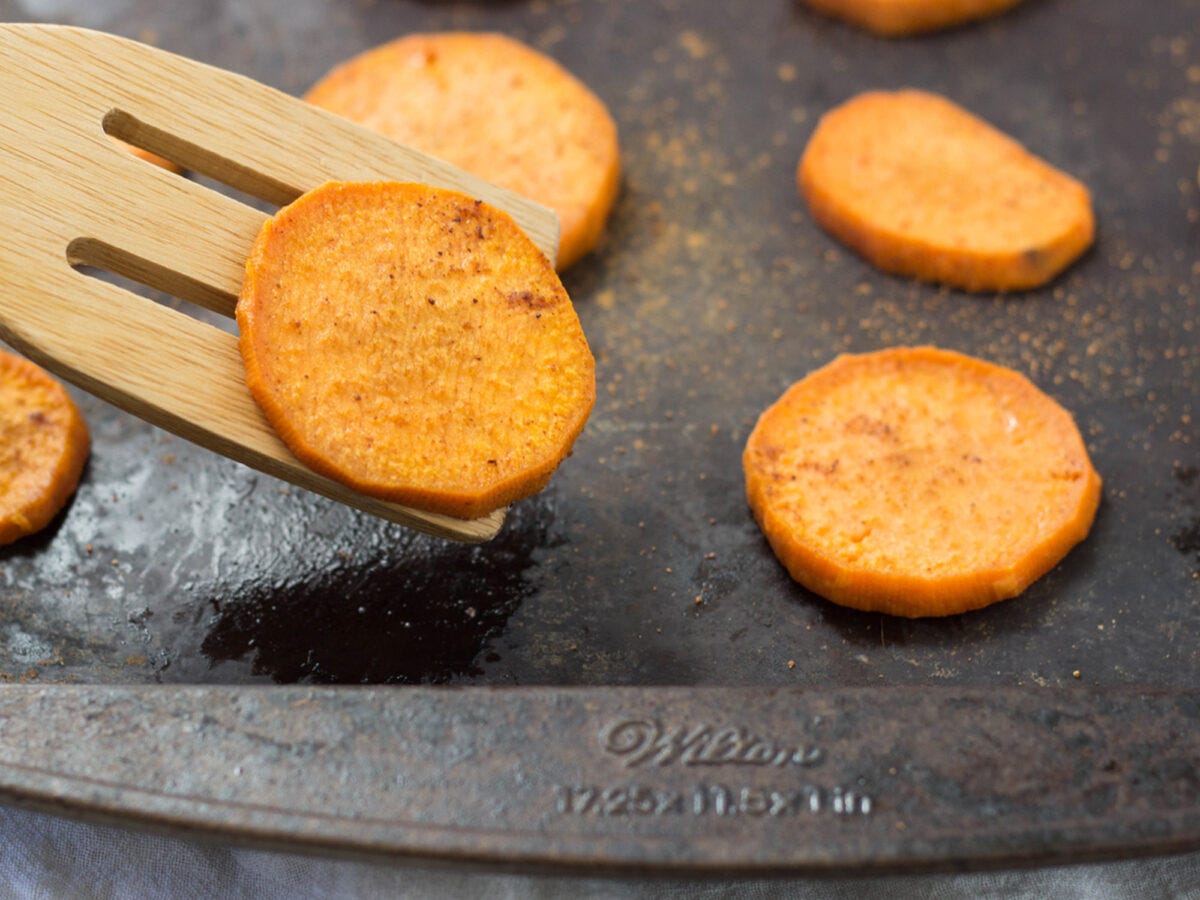
🥗 These baked spiced sweet potatoes are a super simple and delightful side dish to serve with pork, beef or poultry. Serve them as is or sprinkle with a little cinnamon-maple sugar right out of the oven. Bonus: roasting with a little oil actually increases the absorption of beta-carotene!
Add this recipe to your meal plan this week with Real Plans, the official Nutrivore meal planning app!
Nutrivore Mindset Corner
🧠The number one strategy to improve diet quality is to prepare food at home. And this is backed up by science (which I do summarize in my book): studies show that the more meals per week that we eat out of the house, the more nutrient insufficiencies we are likely to have and the worse our health outcomes are on average. Bonus, cooking at home is almost always more affordable and it gives us the opportunities to a) cater to our own flavor preferences, and b) to shop with nutrient density in mind.
Of course, this doesn’t mean that we can’t use pre-prepared and packaged food shortcuts like rotisserie chickens, deli side dishes and veggie trays, bagged salad mixes, frozen steam-in-the-bag veggies, jarred sauces, and canned beans, just to name a few handy-dandy options that can help us save loads of time in the kitchen while still helping us prepare a balanced, nutritious, and delicious meal. And in fact, if you aren’t very comfortable in the kitchen, leaning on these types of foods can be a great starting point for building up that cooking confidence. Leveraging packaged foods to make it easier to cook at home is an awesome strategy.
And if you don’t know how to cook at all, my recommendation is to find accessible recipes in a cookbook or online (my Baked Spiced Sweet Potatoes recipe above is a great example!), and then just jump into the deep end. The best teacher is experience when it comes to cooking. If time and skills are a challenge, save your recipe adventures for the weekend when you have more time and try to cook double or triple batches to enjoy leftovers all week or freeze the leftover to rotate through so you don’t feel like you’re eating the same thing over and over again.
Learn everything you need to know about the Nutrivore philosophy in my book, Nutrivore: Eat Any Food, Get Every Nutrient, and Transform Your Health!
Helpful Tip of the Week
💡Let’s talk sweet potatoes! Sweet potatoes are largely cultivated internationally, so you’re not likely to find them at your local farmers’ market unless you live in southern USA or California. Otherwise, you can find these tasty root veggies at your local grocery store year-round!
When choosing, look for firm sweet potatoes with smooth skin and no cuts or bruises. Dark discolored spots and lesions indicate damage from cold. Larger sweet potatoes tend to be starchier.
Store sweet potatoes in a cool, dark, well-ventilated place. I store mine in a wire basket inside my pantry.
Sweet potatoes do not freeze well raw due to their high-water content. However, you can freeze sweet potatoes if you blanch them first. Blanching means placing them in a pot of boiling water until they are tender before removing the potatoes, draining, and placing directly in an ice bath for a minute or two to stop the cooking process. After that, drain again, allow potatoes to cool and pat them dry with a paper towel. The key is to freeze partially cooked potatoes. Once frozen, they can be stored for up to 12 months.
When choosing sweet potato greens, look for deep green colored leaves and store them wrapped in a damp paper towel, in the crisper drawer of your refrigerator. This should allow the greens to keep for several days.
This Week’s Companion Downloads
📥For paid subscribers, your Companion Downloads this week are:
Nutrients for Type 2 Diabetes - This 1-pager PDF guide lists all the nutrients that reduce risk of type 2 diabetes along with top food sources, to give you a quick-reference for foods to add if type 2 diabetes is a concern for you.
Baked Spiced Sweet Potatoes Recipe - A beautifully-designed PDF version of this week’s recipe that you can save or print out, to build your own personalized Nutrivore Cookbook week by week.
Check your inbox for the Companion Downloads arriving in a separate email (or if you use the Substack app, they’ll be in their own post). You can also find them in the archive here. Thank you so much for supporting my work and Nutrivore!
Sincerely,
Dr. Sarah Ballantyne, PhD
Founder of Nutrivore