

👉This week, we’re talking about: vitamin A as an important nutrient for thyroid health; liver as such a concentrated food source of vitamin A (plus many more vitamins and minerals) that we have to be careful not to eat it too frequently to avoid vitamin A toxicity; good plant food sources of vitamin A if liver is not your thing; the strategy of hiding nutrient-dense ingredients (like liver!) from ourselves as adults; and I’m sharing my recipe for Hidden Liver Meatballs if you want to eat liver but don’t want to taste it!
Key Takeaways
✅Vitamin A is important for thyroid health and liver is the single best food source, with a mere two teaspoons supplying the daily value.
✅If you want to eat liver but not taste it, try grinding it and mixing with ground beef in any heavily seasoned recipe like tacos or my Hidden Liver Meatballs below!
✅If you don’t want to eat liver, I’ve listed 5 awesome plant sources of vitamin A below plus what you need to do to increase absorption.
✅For paid subscribers, your companion downloads this week are: Vitamin A Fun Factsheet and Hidden Liver Meatballs. Check your inbox; they’ll be arriving in a separate email (or if you use the Substack app, they’ll be in their own post).
Vitamin A and Thyroid Health
🧬Animal studies have shown that vitamin A has a role in maintaining thyroid health and that vitamin A deficiency interferes with the pituitary-thyroid axis. A deficiency in vitamin A can have adverse outcomes such as increasing the size of the thyroid gland, increasing the secretion and synthesis of thyroid-stimulating hormone, raising circulating concentrations of thyroid hormones, reducing the thyroid gland’s iodine uptake, and impairing the synthesis and iodination of thyroglobulin (a protein produced by the thyroid gland).
In a study of children who had both vitamin A deficiency and iodine deficiency, it was found that the more severe the vitamin A deficiency, the greater the likelihood of developing goiters and abnormal thyroid hormone levels! What’s more, when these children were given salt enriched with either iodine or iodine plus vitamin A, the addition of vitamin A led to a significant decrease in thyroid volume and TSH concentration. Intriguingly, another study of iodine-deficient children found that vitamin A supplementation alone could reduce thyroid gland volume, TSH, and thyroglobulin concentrations—indicating that vitamin A has its own thyroid-protective effects independent of its interactions with iodine.
Want to know the top 25 best food sources of vitamin A? Learn them here.
Get 552% DV Vitamin A with Beef Liver
Offal is another term for organ meats (also known as variety meats because there is a variety of different kinds!). The word itself derives from ‘off’ and ‘fall’, literally referring to the parts of the animal that fall off during butchering. Arguably the king of offal, liver is one of the top nutrient dense foods on the planet (and the best food source of vitamin A)! Fortunately, it’s also one of the easiest of all organ meats to find.
Beef liver has an impressive Nutrivore Score of 4021! A mere two teaspoons of beef liver is enough to supply the daily value of vitamin A! A 3.5-ounce (measured raw) serving additionally delivers: 2471% DV vitamin B12, 1084% DV copper, 333% DV biotin, 212% DV vitamin B2, 143% DV vitamin B5, 82% DV vitamin B3, 73% DV vitamin B9, 72% DV selenium, 64% DV vitamin B6, 61% DV choline, plus good amounts of most other nutrients.
Contrary to popular belief, liver is not full of toxins. Liver is actually the major organ responsible for detoxification. Its’ job is to filter toxins out of our blood, process them, and package them for removal. That means the best food to support our own liver is liver since it contains all the raw materials necessary for detoxification! That being said, liver is one of the few foods that is so concentrated in nutrients that eating it too frequently can cause toxicity (chronic copper and vitamin A toxicity are the two biggest concerns). If you love liver and eat it daily, make sure to limit to one serving (3.5 ounces measured raw, or about 3 ounces cooked).
Beef liver is the 28h most nutrient-dense food! Learn the Top 500 Nutrivore Foods here.
Hidden Liver Meatballs
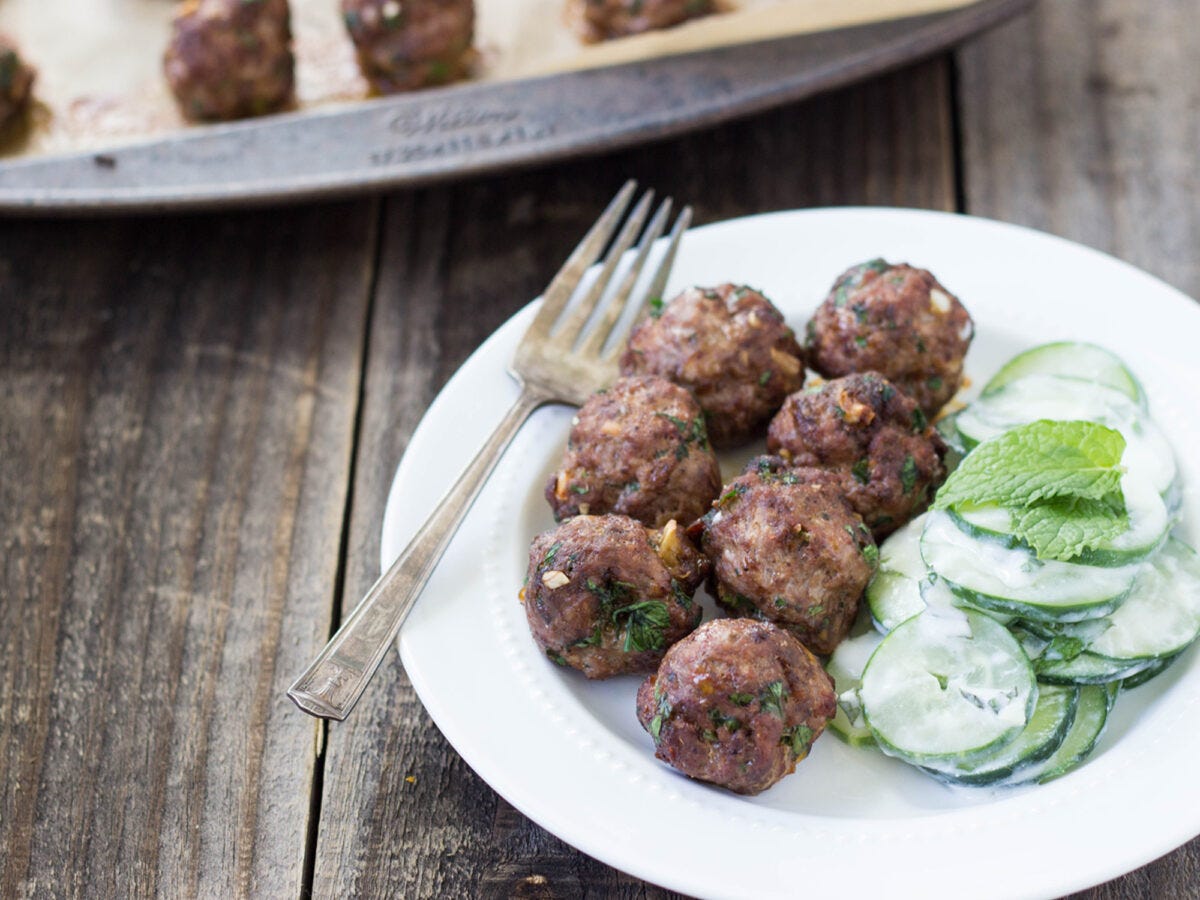
🥗 These Hidden Liver Meatballs are fairly heavily seasoned so the liver flavor is masked well making it more palatable for those not used to it. You can also change the ratio of ground beef to beef liver (try 1.5 pounds ground beef and 0.5 pound liver) to hide the flavor even more.
You can mix the meat and seasonings together and let it rest in the refrigerator making this a great make-ahead recipe. Buy whole liver and grind it up at home in a food processor, chop it up manually, or freeze it and then grate it on a box grater. It does make for a slightly looser meat mix, which is why the arrowroot powder or corn starch is required as a binder.
Add this recipe to your meal plan this week with Real Plans, the official Nutrivore meal planning app!
Nutrivore Mindset Corner
🧠It is okay to hide nutrient-dense foods you don’t like in recipes, even as an adult! Whether that’s sneaking some canned beans into your morning smoothie; chopping up mushrooms super fine and mixing with ground beef to make tacos or cottage pie; blending some roasted veggies with broth to thicken soup; adding canned sardines to your favorite tuna salad; or like this week’s featured recipe, sneaking some ground up beef liver into a heavily seasoned meatball or meatloaf—these are all ways to camouflage nutrient powerhouse foods that you might not enjoy plain.
The key here is to select options and ratios so that the sneaky nutrient-dense food is hidden enough that it doesn’t take away from your enjoyment of the dish. For example, great northern or navy beans have a milder flavor and easier-to-blend texture than something like chickpeas, so they may be a better option for a smoothie. Chicken liver has a much more mild flavor compared to beef liver (plus is often easier to find in the grocery store), so that may be the best way to go for your hidden liver meatloaf. You might find that mixing sardines into tuna salad only works for you with a 1:3 or 1:4 ratio, or that the only veggies you like blended up to thicken broth are zucchini, celery, and parsnip. This strategy only works if you actually like eating the final dish, and it’s okay to experiment with different variations until it’s to your liking.
It’s also okay not to sneak nutrient-dense foods into your meals, and instead work on building meals using the foods you already like (plus have access to and can afford) that meet your nutritional needs. And if you’re chomping at the bit to better understand what that looks like, my best resources are my book and my Nutrivore90 online course.
Learn everything you need to know about the Nutrivore philosophy in my book, Nutrivore: Eat Any Food, Get Every Nutrient, and Transform Your Health!
Helpful Tip of the Week
💡There’s lots of other ways to get enough vitamin A if liver is not your thing. You can get good amounts from most types of seafood (especially shrimp, salmon, sardines, and tuna) and eggs. And many plant foods are great sources, too!
Even though the conversion from vitamin A precursor carotenoids like beta-carotene to active vitamin A in the body is very inefficient—for example, the conversion factor for beta-carotene to retinal is 28:1—some plant foods are so packed with carotenoids that they’re still amazing sources of vitamin A! For example, even after accounting for poor conversion:
1 cup of carrots (measured raw) has 119% DV
1 cup of sweet potato (measured raw) has 105% DV
1 cup of butternut squash (measured raw) has 83% DV
2 cups of turnip greens (measured raw) has 71% DV
2 cups of dandelion greens (measured raw) has 62% DV
Orange, yellow and red fruits and veggies are almost always great sources of carotenoids, and dark leafy greens are also usually great sources. Not all carotenoids can be converted into vitamin A, but because carotenoids are beneficial in their own right, you win either way.
Note that carotenoids are fat soluble nutrients, so it greatly increases absorption if you consume high-carotenoid fruits and vegetables with a source of fat! So go ahead and dip your carrot sticks in ranch, add a pat of butter to your baked sweet potato, toss your butternut squash in olive oil before roasting, braise your turnip greens with salt pork or ham hock, or toss your dandelion greens in a delightful vinaigrette. You’ll absorb more carotenoids and other fat-soluble vitamins like vitamin K, and make them tastier at the same time!
This Week’s Companion Downloads
📥For paid subscribers, your Companion Downloads this week are:
Vitamin A Fun Factsheet - This 2-page PDF guide summarizes all the most important information about what vitamin A does, top food sources, and how much we need for each demographic group.
Hidden Liver Meatballs Recipe - A beautifully-designed PDF version of this week’s recipe that you can save or print out, to build your own personalized Nutrivore Cookbook week by week.
Check your inbox for the Companion Downloads arriving in a separate email (or if you use the Substack app, they’ll be in their own post). You can also find them in the archive here. Thank you so much for supporting my work and Nutrivore!
Sincerely,
Dr. Sarah Ballantyne, PhD
Founder of Nutrivore