

👉This week, we’re talking about: a phytonutrient called lactucarium and its sedating properties; red leaf lettuce as the most nutrient-dense variety; how to focus food choice after a bad night’s sleep; growing your own lettuce; the best first steps if you’re starting from zero; and lettuce soup as a delicious way to use up lettuce that’s about to go bad.1
Key Takeaways
✅Lactucarium is sedating, but you’d have to eat a ton of lettuce for it to actually improve your sleep.
✅Whenever I have lettuce that’s about to go bad, I stick it in the freezer to save it for a batch of lettuce soup!
✅It’s normal to feel hungrier and crave junk food and comfort food after a night of poor or too-little sleep. My tips on what to do are below!
✅For paid subscribers, your downloads this week are: Nutrients for Sleep and Lettuce Soup
Lactucarium for Sleep
🧬Lactucarium, which is found in lettuce, and also sometimes called “lettuce opium” because of its sedative and analgesic properties. In its more concentrated form, lactucarium is known to provide a sense of euphoria and promote restful sleep. In a 2011 prospective single-blind study of the efficacy and safety of lettuce seed oil in patients with sleep disorders, 60 patients were split into 2 groups and half were given capsules containing 1000 mg lettuce seed oil. After 1 week, patients receiving the lettuce seed oil reported significantly improved sleep scores as compared to those in the placebo group.
What does this translate to for us humans eating fresh lettuce? Using some rough averages, back-of-the-envelope math tells us that somewhere in the neighborhood of 500 grams (or about 18 ounces) of fresh lettuce would have a soporific effect—that translates to about a head and a half of lettuce or about 15 cups! Good news for huge lunch salads (because they probably won’t instigate an afternoon nap), and maybe less good news if you’re looking for a lettuce-y bedtime snack or that lettuce water social media trend to support sleep quality (in which case, a lettuce seed extract is probably a better bet, or better yet a focus on nutrients with a track record of improving sleep using this week’s download for paid subscribers, Nutrient for Sleep, which can be found at the bottom of this post).
Want to know the top 25 best food sources of every nutrient? Learn them here.
The Most Nutrient-Dense Lettuce: Red Leaf
🥬With its Nutrivore Score of 2684, red leaf lettuce is the most nutrient dense of the common lettuce varieties, thanks to delivers 65% DV vitamin K, 23% DV vitamin A, 11% DV biotin, 3480 micrograms of carotenoids and 63 milligrams of polyphenols (including anthocyanins)!
Lettuce was first farmed in Ancient Egypt as early as 2680 BC, where it was used for its leaves and harvesting oil from its seeds. In many cultures, lettuce was considered a sacred plant and it appears in many medieval writings, especially as a medicinal herb.
Red leaf lettuce is the 46th most nutrient-dense food! Learn the Top 500 Nutrivore Foods here.
Lettuce Soup Recipe
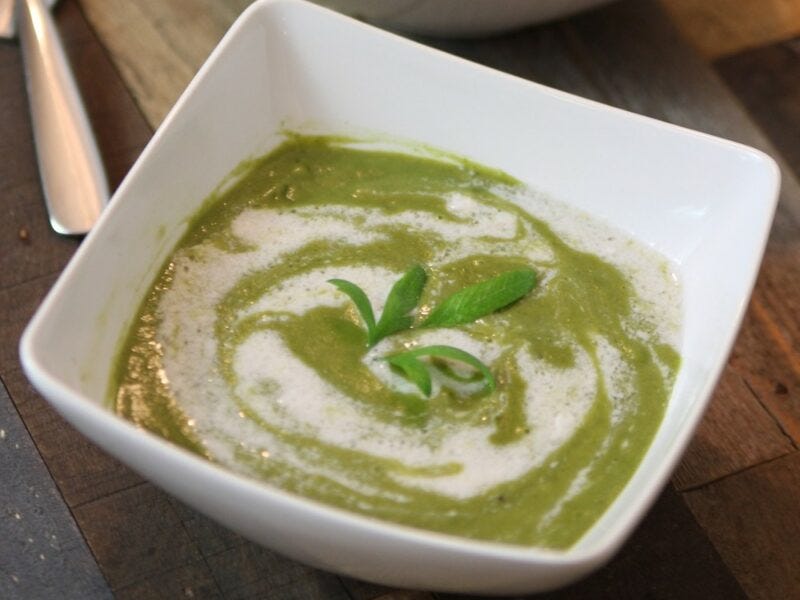
🥗We tend to think of lettuce as a purely a salad vegetable, but it’s actually delightful cooked in recipes like this lettuce soup! Plus, this soup is a great way to make sure lettuce never goes to waste. If you ever find yourself with lettuce in the fridge that is about to go bad, instead of throwing it out, trim off any bits that are starting to brown and toss it in a freezer-safe container or bag in the freezer. Once you have the equivalent of two large heads of lettuce saved up, make this soup! This soup is also a great way to use lettuce that is starting to bolt in the garden.
Add this recipe to your meal plan this week with Real Plans, the official Nutrivore meal planning app!
Nutrivore Mindset Corner
🧠We don’t always have control over our sleep. Stress, illness, hormones, caregiving, travel, anxiety, deadlines, and plain old life can all interfere—no matter how many “good sleep habits” we try to stack. And the science is very clear here: insufficient or poor-quality sleep increases appetite, heightens cravings (especially for energy-dense foods), and reduces inhibition and decision-making capacity. In other words, after a bad night’s sleep, your brain is biologically primed to seek more food and addictively delicious food. This isn’t a willpower issue or a personal failure—it’s a predictable physiological response.
On those days, the Nutrivore approach isn’t about restriction or “getting back on track.” It’s about strategic nourishment. Focus on addition, not subtraction. Prioritize meals and snacks that include protein, fiber-rich carbohydrates, colorful produce, and healthy fats to help stabilize blood sugar and energy throughout the day. Think egg and veggie scramble with multigrain toast for breakfast; a sandwich with veggies and hummus on the side for lunch, and maybe a casserole with veggies, meat, pasta and your favorite sauce for dinner—foods that are grounding, comforting, and satisfying. Comfort matters here: warm foods, familiar flavors, and meals that feel emotionally supportive can reduce the urge to graze or chase energy later on. If you’re feeling snacky, try reaching for fruit and pairing it with protein for greater satiety—think apples and cheese slices, banana and peanut butter, or berries and hard-boiled eggs. And, if you’re craving a sweet treat, that’s fine! Enjoying dessert with your nutrient-dense and balanced meals is always a healthy eating pattern focused on sustainability.
There’s also some interesting research showing that higher fiber intake and starchy carbohydrates at dinner can support better sleep. So, by focusing on adding these types of foods in, you’re also gently supporting your body’s recovery for the following night. The goal isn’t to “eat perfectly” after poor sleep; it’s to care for a tired body and brain. When you nourish instead of judge, you give your body the best chance to stabilize today—and sleep better tomorrow.
Learn everything you need to know about the Nutrivore philosophy in my book, Nutrivore: Eat Any Food, Get Every Nutrient, and Transform Your Health!
Helpful Tip of the Week
💡Lettuce is an easy vegetable to grow from seed, making it one of the best cost-saving vegetables even if you have limited garden space. Most varieties of lettuce prefer cooler weather (between 55 and 65°F [13-18 °C]) and do not tolerate frosts—making them perfect for spring and fall gardening in most areas—plus, there are some heat-tolerant and frost-tolerant options if you live in a less temperate climate. If you aren’t sure what varieties grow in well in your area, visit a local farmers market and ask the vendors what cultivars they’ve had success with. You can also try a mesclun mix for a variety of leafy greens to increase your odds of some happy plants.
My preference is to grow leaf lettuce varieties over head lettuce varieties because you can harvest just the outer leaves as the plant grows, for continuous bounty throughout the growing season. I dedicate two 4’ by 4’ beds to leafy greens from fall through spring, which provides more lettuce than my family of four can keep up with (which is how I know that lettuce soup is so delicious!).
Watch & Learn
🎥Check out my YouTube videos on the best first steps if you’re starting from zero, and the benefits of leafy vegetables! And don’t forget to subscribe and hit bell notifications, so you never miss a new video!
This Week’s Downloads
📥For paid subscribers, your downloads this week are:
Nutrients for Sleep - This 1-pager PDF guide lists all the nutrients that improve sleep quality and/or improve insomnia along with top food sources, to give you a quick-reference for foods to add if better sleep is a goal for you.
Lettuce Soup Recipe - A beautifully-designed PDF version of this week’s recipe that you can save or print out, to build your own personalized Nutrivore Cookbook week by week.
You can find buttons to download at the bottom of this Substack. Thank you so much for supporting my work and Nutrivore!
Sincerely,
Dr. Sarah Ballantyne, PhD
Founder of Nutrivore
Medical Disclaimer: The information provided in this Substack is for educational purposes only and is not intended as a substitute for professional medical advice, diagnosis, or treatment. Always seek the advice of your physician or another qualified healthcare provider with any questions you may have regarding a medical condition or dietary changes.
FTC Disclosure: Some links in this Substack may be affiliate links, meaning I may earn a small commission if you purchase through them at no additional cost to you. I only recommend products I genuinely believe in. Thank you for supporting my work!
