

👉This week, we’re talking about: alpha-carotene for healthy aging; pumpkin as one of the best food sources of alpha-carotene; the wishy-washy vegetable family that is root veggies; why I love answering the follow-up question “does it matter if…?”; the best things to measure when we don’t want to track weight, and my Pumpkin Chili recipe.1
Key Takeaways
✅Alpha-carotene, while not as extensively researched, looks to be even better us than other carotenoids. And pumpkin is one of the best food sources!
✅Winter squash count as a root vegetable in nutritional sciences! So do lots of veggies that aren’t actually roots.
✅The most common follow-up question I receive: “Does it matter if…”? The answer is almost always a comforting and celebratory “no.”
✅For paid subscribers, your downloads this week are: Top 10 Carotenoid Foods Fridge List and Pumpkin Chili.
α-Carotene for Healthy Aging
🧬Carotenoids vary in their health benefits, and one interesting stand-out is alpha-carotene, which seems to have some unique benefits of particular relevance as we age.
Alpha-carotene is more protective against cardiovascular disease mortality and all-cause mortality than beta-carotene, beta-cryptoxanthin, lutein or lycopene. Although chemically very similar to beta-carotene, alpha-carotene may have greater antioxidant benefits. And recent studies have shown that older adults with the highest serum levels of alpha-carotene have increased muscle strength and improved cognitive function compared to those with the lowest levels, whereas other carotenoids didn’t have strong associations with strength or cognition in these studies.
Want to know the top 25 best food sources of carotenoids? Learn them here.
Get 4660 mcg α-Carotene with Pumpkin
🍠Pumpkin is packed with carotenoids and one of the best food sources of alpha-carotene with 4660 micrograms per 1-cup serving, measured raw. A serving of pumpkin also delivers 55% DV vitamin A, 16% DV copper, 12% DV vitamin C, 10% DV vitamin B2, and 182 milligrams of polyphenols. In fact, it’s the most nutrient-dense winter squash with its impressive Nutrivore Score of 1036!
And, fun fact: canned pumpkin is even more nutrient-dense than fresh!
Pumpkin is the 122nd most nutrient-dense food! Learn the Top 500 Nutrivore Foods here.
Pumpkin Chili Recipe
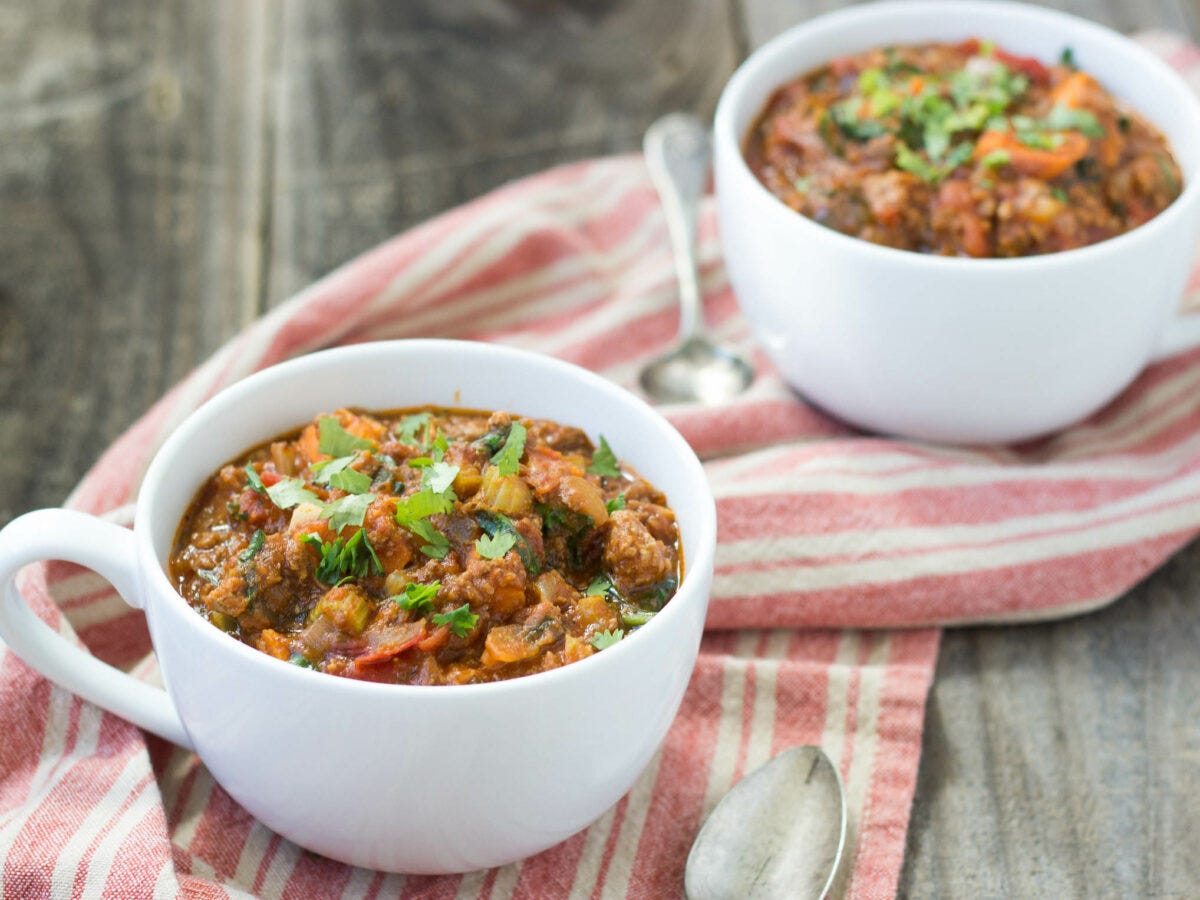
🥗 This Pumpkin Chili leans into pumpkin with both fresh pie pumpkin, roasted and added for texture, and canned pumpkin for a thick, incredibly flavorful, slightly sweet, chili that is also packed full of nutrient-rich vegetables and herbs. This is a great option for people who don’t tolerate beans, and with a Nutrivore Score of 555, it is a more nutrient-dense take on a standard favorite.
Add this recipe to your meal plan this week with Real Plans, the official Nutrivore meal planning app!
Nutrivore Mindset Corner
🧠Whether you follow me across social media or just read my weekly newsletters here on Substack, you’ve probably noticed that I spend a lot of time highlighting the nutrients and health benefits of individual foods. I especially enjoy highlight foods that have been unfairly maligned by various diets, or that have an unearned reputation of being unhealthy or nutritionally void.
One of the most common follow-up questions I get asked is “does it matter if…”? Does it matter if I eat bananas fully ripe or on the green side? Does it matter if I eat wild salmon or farmed? Does it matter if I eat nuts raw or roasted? Does it matter if I add a cream sauce to my spinach? Does it matter if I eat canned beans or do I need to prepare them from scratch? Does it matter if I puree my vegetables into a smoothie? Does it matter if I only like soup?
Man, diet culture has taught us to overthink everything, or maybe worse, diet culture has taught us that if we’re enjoying the experience of eating a food, that it somehow doesn’t count. That’s how I interpret these types of questions—at their heart, they’re asking if the way you prefer to eat a food still counts for the nutrients and/or health benefits I highlighted. The answer is always yes, most often a resounding yes, occasionally a yes with some nuance and caveats. (An example of the latter: we don’t get the blood pressure lowering benefits of potatoes when we eat them in French fry form because the extra salt counteracts the potassium.) And, I should emphasize here that I do truly enjoy answering these questions because it’s my opportunity to make you feel food about the nutrient-dense health-promotion foods you already enjoy and eat on the regular!
The studies that evaluate the health benefits of foods lump everything together, every serving of that food is counted towards a participant’s intake. They’re not splitting hairs, for example, only counting it as a serving if it’s organic, or eaten within 3 days of harvest. And, these are often population studies, looking at typical quality food, eaten in typical ways, by typical people. Even for intervention trials, the foods supplied are usually typical quality purchased from a typical store. And the health signals can be incredibly strong! We can take comfort in that broad range of typical, and that our preferences are within the average. And we can celebrate knowing that yes, it all counts, and no, it doesn’t matter…. in the best possible way.
Learn everything you need to know about the Nutrivore philosophy in my book, Nutrivore: Eat Any Food, Get Every Nutrient, and Transform Your Health!
Helpful Tip of the Week
💡Root vegetables are a particularly beneficial food family to consume (why I consider them a Nutrivore Foundational Food); and good news, there’s more to choose from than you think! That’s because the root vegetable family acts as a catch-all for a wide range of vegetables and fruit that all offer similar nutrition. We count “true” roots, in addition to other plant parts that grow underground, including: bulbs like onions, corms like taro, rhizomes like ginger, and tubers like potatoes. Even winter squash like pumpkin and acorn squash, which are botanically fruit, are included in the root vegetable family because they are nutritionally and culinarily similar.
Root vegetables tend to be rich in slow-burning carbohydrates, beneficial fiber types, B-vitamins (other than vitamin B12) and minerals, most notably copper, magnesium, manganese, and potassium. Starchy root vegetables include: potatoes, sweet potatoes, cassava, taro, green plantain, parsnip and winter squash. Non-starchy root vegetables (which still contain starch, but are just less concentrated) include: carrots, beets, radish, daikon, jicama, bamboo shoots, and Jerusalem artichoke.
The long-term health benefits of consuming a serving or more of root vegetables per day include:
lower risk of several forms of cancer (including kidney and stomach),
lower risk of age-related cognitive decline
lower risk of anxiety and depression
lower risk of type 2 diabetes
And root vegetables are one of the best vegetable families for reducing risk of all-cause mortality (an indirect measure of overall health and longevity). The good news is that, with so many options to choose from, this is a relatively easy vegetable family to incorporate into our routines.
Watch & Learn
🎥Check out my YouTube videos on ways to track progress that aren’t weight loss and the benefits of orange fruits and veggies (like pumpkin)! And don’t forget to subscribe and hit bell notifications, so you never miss a new video!
This Week’s Downloads
📥For paid subscribers, your downloads this week are:
Top 10 Carotenoid Foods Fridge List - This 1-pager PDF guide lists the top 10 common food sources of carotenoids, how much carotenoids you get per serving (and how much a serving is!), while highlighting a few other valuable nutrients each food provides.
Pumpkin Chili Recipe - A beautifully-designed PDF version of this week’s recipe that you can save or print out, to build your own personalized Nutrivore Cookbook week by week.
You can find buttons to download at the bottom of this Substack. Thank you so much for supporting my work and Nutrivore!
Sincerely,
Dr. Sarah Ballantyne, PhD
Founder of Nutrivore
Medical Disclaimer: The information provided in this Substack is for educational purposes only and is not intended as a substitute for professional medical advice, diagnosis, or treatment. Always seek the advice of your physician or another qualified healthcare provider with any questions you may have regarding a medical condition or dietary changes.
FTC Disclosure: Some links in this Substack may be affiliate links, meaning I may earn a small commission if you purchase through them at no additional cost to you. I only recommend products I genuinely believe in. Thank you for supporting my work!
