

👉This week, we’re talking about: the link between glucosinolates and neurodegenerative disease; turnips as an awesome source of glucosinolates; planting and harvesting turnips; how to enjoy holiday treats while maintaining healthy eating patterns; and I’m sharing my favorite Scalloped Turnips recipe.1
Key Takeaways
✅Glucosinolates protect our brain cells from oxidative stress, inflammation and the accumulation of tau proteins.
✅Turnips are not only rich in glucosinolates, but they have a fascinating history! Carving turnips for Halloween is a 19th century Irish and Scottish tradition that pre-dates the pumpkin.
✅Holiday treats can be enjoyed while maintaining an overall healthy diet, and I share my best tips below.
✅For paid subscribers, your downloads this week are: Nutrients for Parkinson’s Disease and Scalloped Turnips
Glucosinolates for Brain Health
🧬Glucosinolates are a special class of phytonutrients unique to the cruciferous vegetable family. Among their many benefits, glucosinolates may help reduce the risk of neurodegenerative diseases like Alzheimer’s disease, Parkinson’s disease, multiple sclerosis, and ALS because they are able to cross the blood-brain barrier and protect brain cells by activating the Nrf2/ARE pathway.
Sulforaphane is one of the most well-studied glucosinolates. Both in vitro and in vivo, sulforaphane has shown efficacy for neurodegenerative diseases by activating genes and molecules with antioxidant, anti-inflammatory, and anti-apoptotic properties. Sulforaphane has therapeutic potential in kidney disease by stimulating the NRF2 pathway (important in protecting cells from oxidative injury). In addition, it exhibits antimicrobial activity against both Gram-positive and Gram-negative bacteria and prevents the growth of a range of food-borne pathogens and enteropathogenic microbes. In fact, sulforaphane has been shown to prevent the growth of H. pylori, a pathogen associated with gastric ulcers and enhanced risk of gastric cancer.
Although research in living humans is limited, sulforaphane is particularly promising due to its relatively high bioavailability (80% absolute bioavailability, compared to 1 – 8% for many polyphenols), enhancing the likelihood that the results of in vitro research could pan out in humans.
Want to know the top 25 best food sources of glucosinolates? Learn them here.
Get 345 mg Glucosinolates with Turnip
A mere 1-cup serving of turnips contains a whopping 345 milligrams of glucosinolates! And with a Nutrivore Score of 1954, turnips are one of the most nutrient-dense root vegetables out there! Per serving, turnips also provide 30% DV vitamin C, 12% DV copper, and 117mg polyphenols.
Maybe the most interesting thing about turnips is that carving turnips for Halloween is a 19th century Irish and Scottish tradition that pre-dates the pumpkin! As a matter of fact, turnips were hollowed out to act as lanterns and carved with grotesque faces to scare off evil spirits and demons. The word ‘jack-o-lantern’ comes from an Irish legend and refers to a drunkard named Jack who bargains with Satan and ends up barred from heaven and hell and doomed to roam the Earth with only a hollowed-out turnip lit by a burning coal to guide his way.
Turnip is the 67th most nutrient-dense food! Learn the Top 500 Nutrivore Foods here.
Scalloped Turnips Recipe
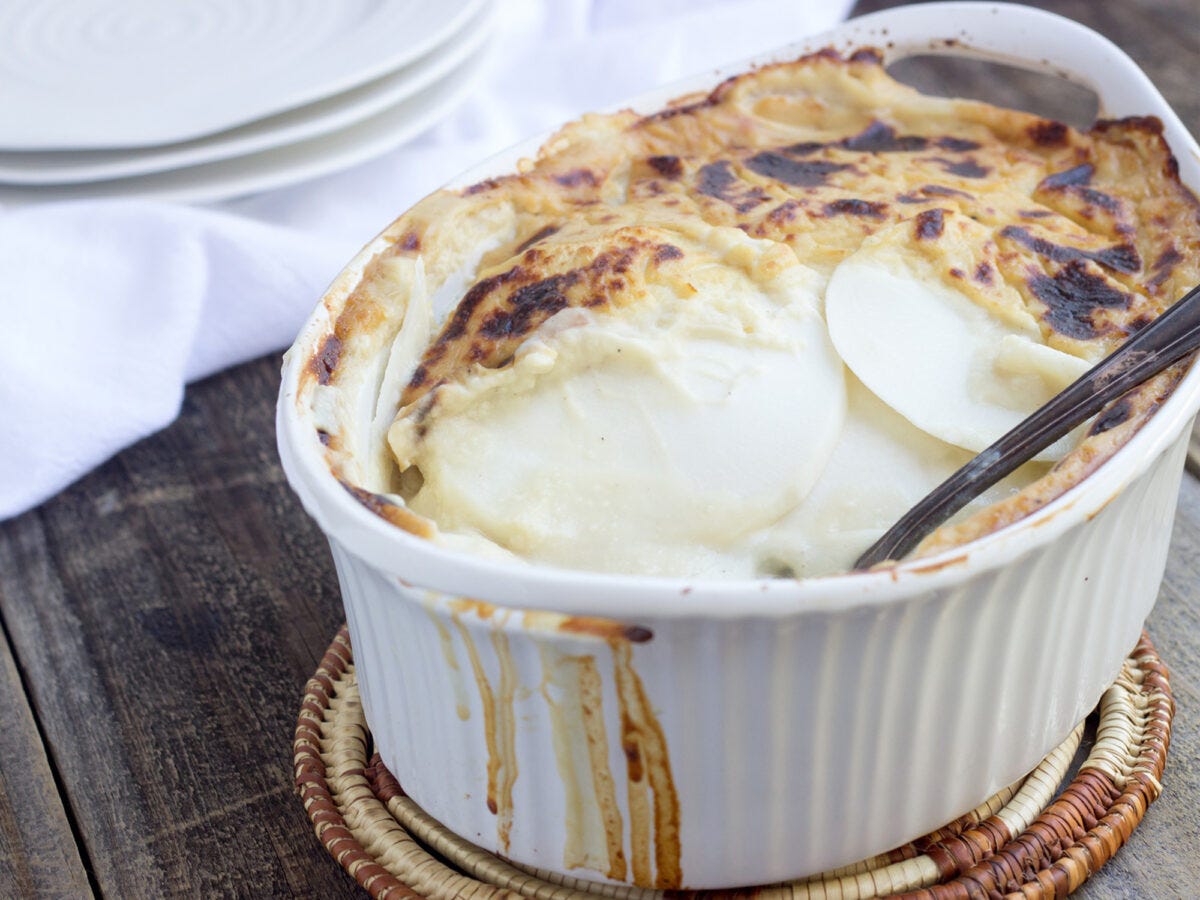
🥗 This recipe for scalloped turnips doubles down on cruciferous vegetables by additionally using cauliflower blended with broth to make a flavorful sauce instead of a traditional roux. This recipe is delightful with the addition of some parmesan cheese both to the sauce and sprinkled over the top before baking.
Add this recipe to your meal plan this week with Real Plans, the official Nutrivore meal planning app!
Nutrivore Mindset Corner
🧠As we enter the holiday season, it’s completely normal to feel a little food guilt creeping in. Many of us end up swinging between “being good” and “giving up,” especially when treats are everywhere. But enjoying the flavors of the holidays doesn’t mean you’ve abandoned healthy eating—not even close. A nourishing diet has room for celebration, joy, and the foods that connect us to family and tradition.
Here are a my tips for navigating the holiday season while both embracing quality-of-life foods and maintaining an overall healthy diet.
Give yourself full permission to enjoy treats and traditional dishes. When we tell ourselves certain foods are “off limits,” it actually increases our desire for them, often leading to feeling out of control around those foods later. Knowing you’re allowed to enjoy holiday foods helps you savor them more mindfully and with less urgency.
Don’t skip meals. Diet culture teaches us we need to “earn” treats, but skipping meals can backfire—leaving us overly hungry and with less control over our decisions. Pairing treats with balanced, satisfying meals helps support steady energy, improves satiety, and naturally moderates intake without restriction.
Keep nutrient density in the mix. Continue prioritizing balanced meals made mostly of whole and minimally processed foods so your nutritional needs are met and you’re getting in those servings of the foods that support long-term health. Holidays feel better—not harder—when nourishment and celebration coexist.
Remember: a healthy diet isn’t defined by a single meal or a single season. It’s the big picture that matters. When we nourish ourselves consistently and make room for joy along the way, food becomes something that supports our well-being—not something we have to battle with.
Learn everything you need to know about the Nutrivore philosophy in my book, Nutrivore: Eat Any Food, Get Every Nutrient, and Transform Your Health!
Helpful Tip of the Week
💡Let’s talk about growing our own turnips! Did you know turnips are best planted with English peas as a companion plant? However they would be stifled and not grow well with Irish potatoes? Companion crops play nice together and often benefit from growing next to each other. They may repel pests or collaborate rather than compete for soil nutrients. Non-companion crops aren’t good neighbors and don’t play nice; these plants are best kept apart in your garden plan.
In addition, turnips are a cool season crops and don’t like it hot—they not only tolerate cold temperatures, they need them to germinate, grow, set fruit, and mature. Hot weather makes root vegetables woody and leafy greens bitter. These seeds go into the ground before the last frost date in spring. Some, like carrots and kale, can even be overwintered and get sweeter after the first frost in the fall.
Watch & Learn
🎥Check out my YouTube videos on how long it actually takes to make habits stick and nutrients for Alzheimer’s disease! And don’t forget to subscribe and hit bell notifications, so you never miss a new video!
This Week’s Downloads
📥For paid subscribers, your downloads this week are:
Nutrients for Parkinson’s Disease - This 1-pager PDF guide lists all the nutrients that reduce risk of Parkinson’s disease along with top food sources, to give you a quick-reference for foods to add if Parkinson’s disease is a concern for you.
Scalloped Turnips Recipe - A beautifully-designed PDF version of this week’s recipe that you can save or print out, to build your own personalized Nutrivore Cookbook week by week.
You can find buttons to download at the bottom of this Substack. Thank you so much for supporting my work and Nutrivore!
Sincerely,
Dr. Sarah Ballantyne, PhD
Founder of Nutrivore
Medical Disclaimer: The information provided in this Substack is for educational purposes only and is not intended as a substitute for professional medical advice, diagnosis, or treatment. Always seek the advice of your physician or another qualified healthcare provider with any questions you may have regarding a medical condition or dietary changes.
FTC Disclosure: Some links in this Substack may be affiliate links, meaning I may earn a small commission if you purchase through them at no additional cost to you. I only recommend products I genuinely believe in. Thank you for supporting my work!
